
Ashtakoot Matching Explained: What the 8 Points Mean
By Astrologer Anil Bhargava | Updated April 2026 | 8 min read
Every Hindu marriage in India starts with one question: does the kundali match? Ashtakoot matching answers it. This is the most widely used Vedic method for checking compatibility. But most people only see the final score and never learn what it actually means.
Quick answer: Ashtakoot matching gives a compatibility score out of 36 points, based on 8 factors from both partners' kundalis. A score above 18 is workable. Above 28 is considered excellent.
This guide covers all 8 kootas, what the score means, and when to trust it. So by the end, you'll be able to read any Guna Milan report with confidence.
Table of Contents
What Does Ashtakoot Mean?
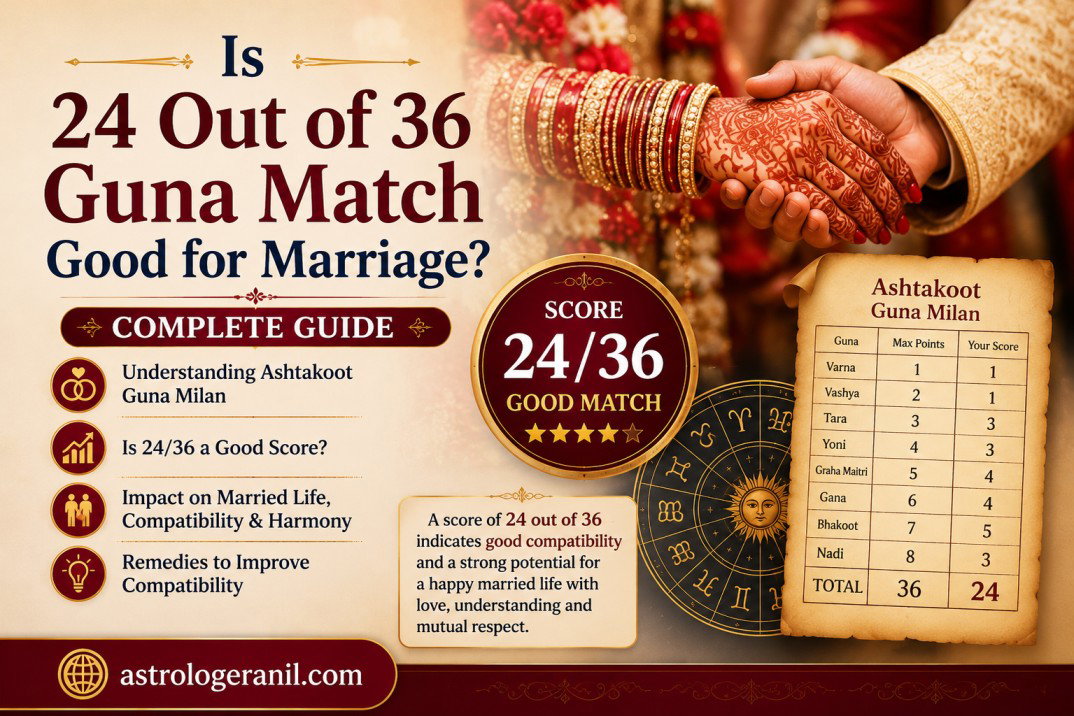
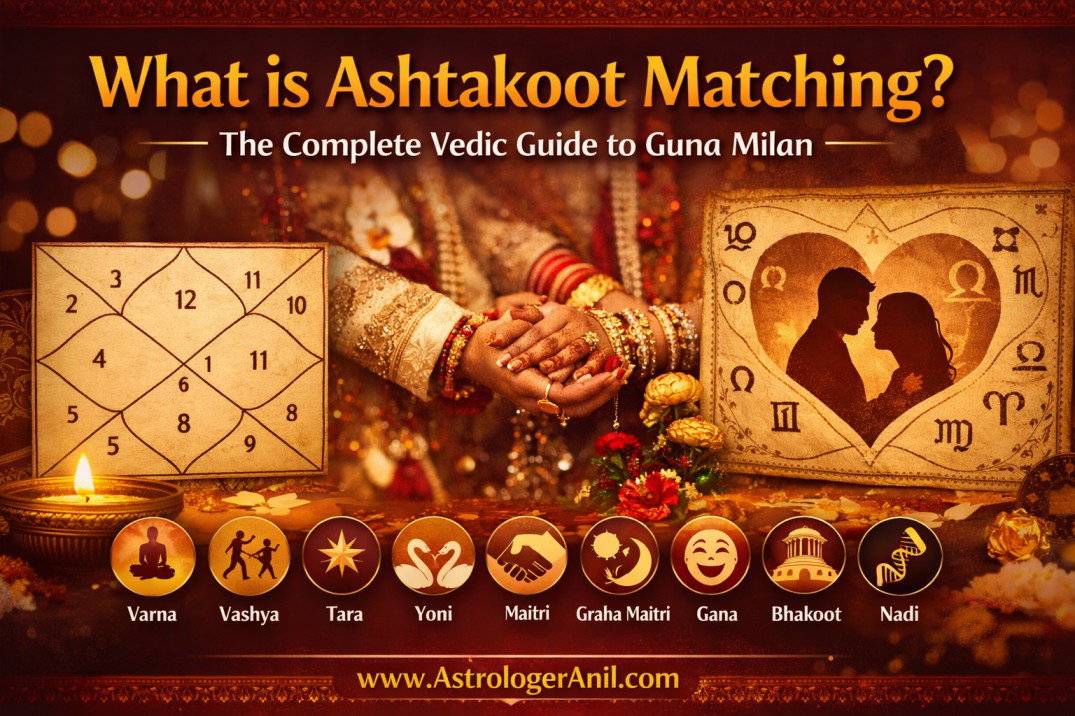
Ashtakoot comes from two Sanskrit words. Ashta means eight. Koota means aspect. So Ashtakoot matching means matching eight aspects of compatibility.
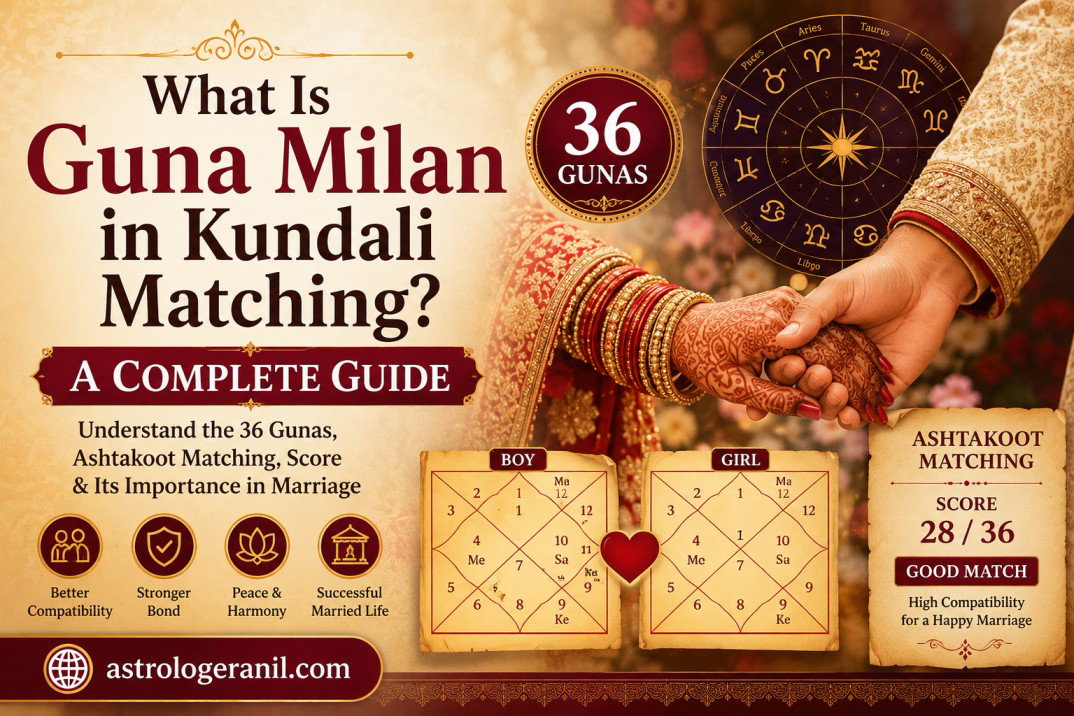
Each koota gets points based on how the two charts align. The maximum score is 36. This system is also called guna milan, or matching of qualities. Both names mean the same thing.
Ashtakoot matching uses the Moon sign and birth Nakshatra of both partners. It doesn't use the full birth chart. That's why it's a starting point, not the final word, in marriage compatibility.
How Ashtakoot Matching Works
The astrologer takes the Moon sign and Nakshatra of both people. From these, each of the 8 kootas gets scored. All 8 scores add up to the final guna milan total, out of 36.
More points mean stronger compatibility in that area. Fewer points mean friction. But the kootas don't carry equal weight. Nadi carries 8 points, the highest of all. Varna carries just 1. So Nadi matters far more than Varna in the final read.
Want your own score? Check it for free with our kundali matching tool. Enter your birth details and see your guna milan result in seconds.
All 8 Kootas, Explained
1. Varna (1 point)
Checks spiritual compatibility and ego balance. It's based on four categories: Brahmin, Kshatriya, Vaishya, and Shudra. The groom's Varna should ideally match or rank above the bride's to receive full points.
2. Vashya (2 points)
Measures mutual attraction and control between partners. A good Vashya match means respect and balance after marriage.
3. Tara (3 points)
Also called Dina Koota. It points to health and longevity for both partners. A strong Tara match supports a long, healthy life together.
4. Yoni (4 points)
Tests physical and sexual compatibility. All 27 Nakshatras map to 14 animal symbols. Matching or compatible animals signal strong physical harmony.
5. Graha Maitri (5 points)
Measures intellectual and emotional connection, based on Moon sign lords. A strong score means the couple thinks alike and supports each other's goals.
6. Gana (6 points)
Covers temperament and behavior. Nakshatras are split into three groups: Deva, Manav, and Rakshasa. Matching Ganas supports a peaceful marriage.
7. Bhakoot (7 points)
Relates to finances, family growth, and career after marriage. Certain Moon sign positions, like 6/8 or 2/12, create Bhakoot Dosha, which can affect stability.
8. Nadi (8 points) — the most important koota
Nadi carries more weight than any other koota. It checks genetic health and prospects for children. If both partners share the same Nadi, it forms Nadi Dosha, the most serious flaw in Ashtakoot matching.
Understanding the 36-Point Score
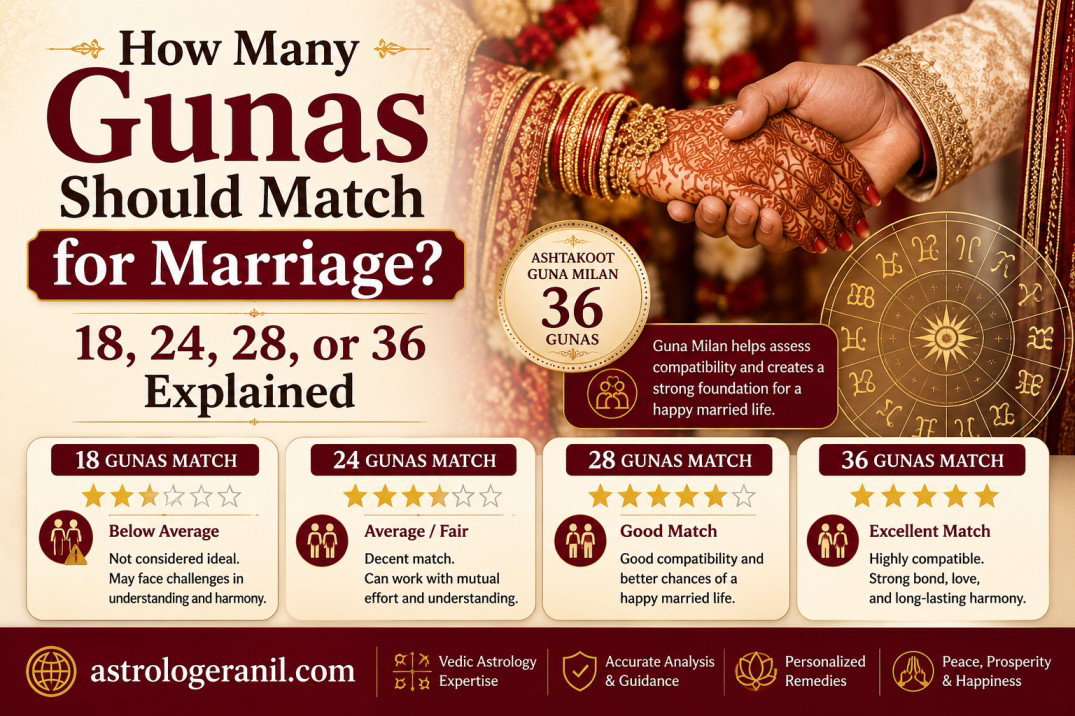
0–17 | Not recommended | High risk. Needs full chart review and remedies before proceeding. |
18–24 | Acceptable | Workable match. Check individual doshas closely. |
25–32 | Good match | Strong compatibility. Still confirm Nadi and Bhakoot are clear. |
33–36 | Excellent | Rare and highly favorable. |
But the total score isn't the whole picture. A score of 20 with no Nadi Dosha is often better than a 28 with Nadi Dosha present. So the doshas matter as much as the number.
Nadi Dosha: Why It Outweighs the Total Score
Nadi Dosha happens when both partners share the same Nadi group. All 27 Nakshatras are split into three Nadi groups:
Aadi Nadi (Vata): Ashwini, Ardra, Punarvasu, Uttara Phalguni, Hasta, Jyeshtha, Moola, Shatabhisha, Purva Bhadrapada
Madhya Nadi (Pitta): Bharani, Mrigashira, Pushya, Purva Phalguni, Chitra, Anuradha, Purva Ashadha, Dhanishtha, Uttara Bhadrapada
Antya Nadi (Kapha): Krittika, Rohini, Ashlesha, Magha, Swati, Vishakha, Uttara Ashadha, Shravana, Revati
If both partners fall in the same group, Nadi Dosha forms. This doesn't end a match on its own. Remedies exist, and an experienced astrologer can guide you through them.
Ashtakoot vs Dashtakoot: What's the Difference?
Ashtakoot uses 8 kootas, with a maximum score of 36. It's the standard across North India for most arranged marriages.
Dashtakoot uses 10 kootas, common in South India. It adds Rajju and Vedha koota to the standard 8. In this system, Rajju plays the role that Nadi plays in Ashtakoot, the most critical factor.
Both systems rely on the Moon sign and Nakshatra. For most people, Ashtakoot is the right starting point.
Expert Guidance From Anil Bhargava
In 15+ years of practice, across over 1 lakh consultations, I've seen couples score 36 out of 36 and still struggle. I've also seen couples score 19 and go on to build a genuinely happy marriage.
The reason is simple. Guna Milan is a starting point, not the final verdict.
The individual birth chart tells a fuller story. The 7th house, the placement of Venus and Jupiter, the navamsa chart, and the dasha period active at the time of marriage all carry weight. A score of 22 with a strong 7th house often beats a 30 with a weak one.
My advice: treat the Ashtakoot score as a first filter. Then, before any final decision, get a complete kundali reading. This protects against both false confidence and false rejection.
Read more on why the navamsa chart matters before marriage.
When Ashtakoot Matching Helps, and When It Doesn't
Use it as a fast first check. It's especially useful for filtering proposals in arranged marriages before a deeper reading.
Use it to get an initial score, spot Nadi or Bhakoot Dosha, and set the stage for a full kundali analysis.
But don't rely on it alone for your final decision:
Don't reject a match just because the score sits between 18 and 22.
Don't approve a match just because the score is above 30.
Don't ignore Nadi Dosha even with a high total.
Don't skip a full kundali consultation for an important decision.
For love marriages, pair this with a love marriage compatibility reading as well.
Frequently Asked Questions
What is Ashtakoot matching in Vedic astrology?
Ashtakoot matching checks marriage compatibility across 8 aspects, based on the Moon sign and Nakshatra of both partners. The score ranges from 0 to 36, and scores of 18 or above are generally acceptable.
How many gunas should match for a good marriage?
A minimum of 18 out of 36 works. 18–24 is acceptable, 25–32 is good, and above 33 is excellent. Still, Nadi Dosha can outweigh a high total, so always check doshas too.
What is Nadi Dosha?
Nadi Dosha forms when both partners share the same Nadi group. Since Nadi carries the highest 8 points, this dosha is considered the most serious in Ashtakoot matching. It can affect health and progeny.
Can a couple marry if the Ashtakoot score is low?
Yes. A low score doesn't guarantee failure. If the individual charts align, no major dosha is present, and remedies are followed, a score of 18 to 22 can still lead to a strong marriage.
Is Ashtakoot matching accurate for love marriages?
Yes, it applies to both love and arranged marriages. For love marriages, it helps spot potential friction early. Pair it with a full kundali reading for the clearest picture.
What is the difference between Ashtakoot and Dashtakoot?
Ashtakoot uses 8 kootas and a 36-point scale, common in North India. Dashtakoot uses 10 kootas, which are common in South India, and adds Rajju and Vedha for deeper analysis.
Conclusion
Ashtakoot matching is the backbone of Vedic marriage compatibility. It gives a fast, structured view of two people across eight key areas, from spiritual harmony to financial prospects.
A score of 18 gets you through the door. A score above 25 builds real confidence. But the number alone never tells the full story. Always pair your guna milan result with a complete kundali reading before any final decision.
Check your score for free with our kundali matching tool. For a full reading beyond the score, including Nadi Dosha, Bhakoot, navamsa comparison, and dasha timing,
book a consultation with Anil Bhargava on WhatsApp.