
Why Astrologers Check the Navamsa Chart Before Marriage
Marriage is a major life decision, and in Vedic astrology, it is analyzed with care. Astrologers use more than just the birth chart when studying compatibility. They also examine the Navamsa (D9) chart.
The Navamsa chartoffers insight into planetary strength and long-term relationship potential. Comparing it with the birth chart helps anticipate the development of a marriage.
With this foundation, let's explore what the Navamsa chart actually is and why it plays such a key role in marriage analysis.
What Is the Navamsa Chart in Vedic Astrology
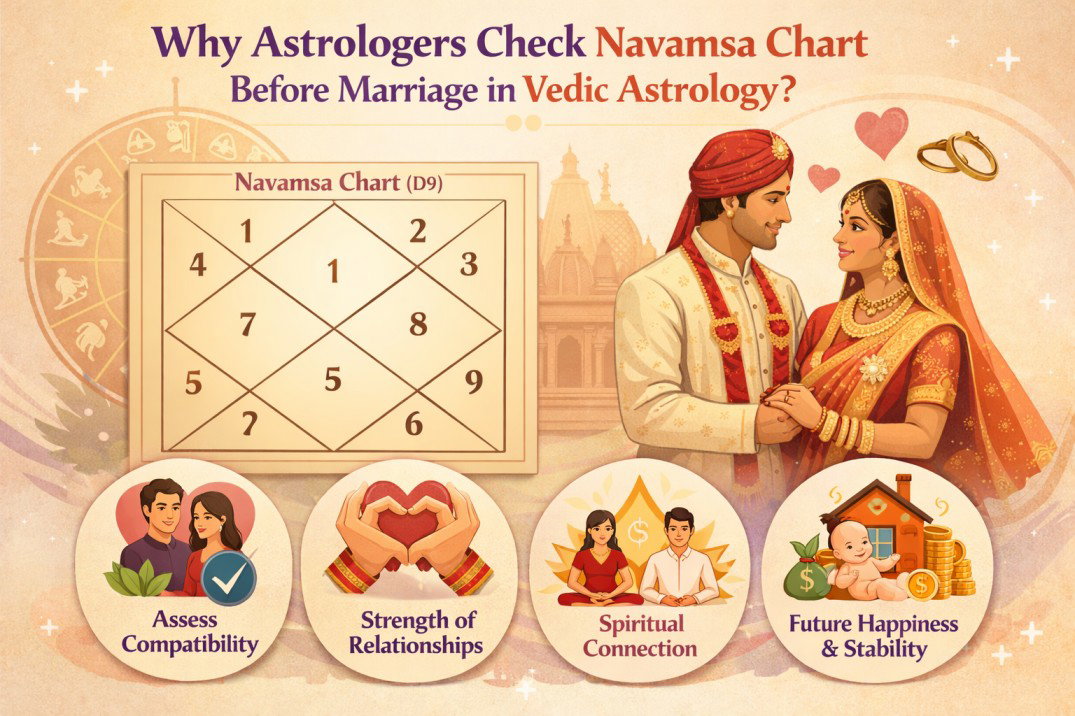
The Navamsa chart is one of the most important divisional charts in Vedic astrology. The term “Navamsa” comes from Sanskrit, where Nav means nine and Amsa means division.
In this system, each zodiac sign in the birth chart is split into nine equal parts. These parts make up the Navamsa chart, providing a more detailed view of the planets' placements.
While the main birth chart offers the big picture of life, the D9 chart highlights the deeper strength and maturity of the planets. Astrologers find the Navamsa chart especially useful for relationships, since marriage often involves emotional and spiritual bonds.
Also Read - How Kundli Matching Helps in Marriage Success
Why the Navamsa Chart Is Important for Marriage
Astrology tries to understand how relationships change over time. The birth chart shows basic tendencies, while the Navamsa chart adds insight into how planetary influences mature.
Astrologers examine the D9 chart to evaluate several aspects of marital life, including:
* emotional compatibility between partners
* long-term stability in marriage
* how strong the 7th house is, since it relates to partnerships
* hidden strengths or weaknesses in the planets that affect relationships
This deeper layer makes the Navamsa chart essential for predicting marriage outcomes.
How the Navamsa Chart Reveals Planetary Strength
To check planetary strength, astrologers rely on the Navamsa chart. Sometimes a planet may look strong in the birth chart but appear weak in the D9 chart, revealing contrasts that matter.
Relying only on the birth chartcan lead to mistakes. Looking at both gives a clearer idea of how planets affect married life.
A planet linked to relationships may seem positive in the main chart, yet fall into a weaker position in the Navamsa chart. This mismatch can ultimately affect how well partners connect or how stable the relationship becomes.
Role of the Navamsa Chart in Kundli Matching
Many families follow the traditional Guna matching system before marriage. This method compares eight compatibility factors between two individuals to determine whether their horoscopes align.
Experienced astrologers go beyond Guna matching and also review both Navamsa charts.
The D9 chart shows things like emotional patterns, compatibility, and shared values. This helps astrologers get a more complete picture of the couple’s potential together.
Importance of the 7th House in the Navamsa Chart
The 7th house represents marriage. Its strength in both charts is a key factor in harmony.
Astrologers often study:
* planets placed in the 7th house
* The strength of the ruling planet of this house
* planetary aspects affecting relationship houses
A strong 7th house in both charts usually indicates a supportive partnership, while weaknesses in the D9 chart prompt more detailed analysis in the following steps of matching.
Understanding the Nature of the Spouse
The Navamsa chart can also provide clues about the personality and nature of the future spouse. Astrologers study planetary placements and signs within the chart to gain insight into relationship dynamics.
This analysis may reveal factors such as:
* personality traits of the partner
* emotional compatibility between partners
* communication style within the relationship
* shared goals and values
These insights help astrologers judge if a couple is likely to create a balanced partnership.
Difference Between Birth Chart and Navamsa Chart
Both charts serve different purposes in astrology.
The birth chart (D1) represents the broader outline of life, including personality, career tendencies, and major life events. It provides the foundation for most astrological interpretations.
The Navamsa chart (D9), on the other hand, probes deeper. It shows hidden planetary strength while revealing potential evolution in relationships.
Studying both charts offers a clearer view of long-term marital potential.
Can the Navamsa Chart Predict Marriage Success?
Astrology can’t promise whether a marriage will work. Instead, it highlights potential strengths and challenges in a relationship.
The Navamsa chart shows how planetary influences may affect emotions over time. Success also depends on communication, patience, and respect.
That’s why responsible astrologers use astrology as a tool for awareness, not absolute prediction, making it important to understand astrology's strengths and limitations before making decisions.
Conclusion
As an important part of Vedic astrology, the Navamsa chart uncovers the deeper strengths of the planets. It also reveals relationship potential by providing more nuanced insights.
Considering that both charts offer more insight into marital compatibility.
This careful approach explains why experienced astrologers always check the Navamsa chart before giving advice on marriage, concluding the discussion on its importance in relationship analysis.