
How Accurate Is Astrology? The Real Percentage Explained
By Pandit Anil Bhargava | Bhargava / Sage Bhrigu Lineage | 15+ Years | 1 Lakh+ ConsultationsLast updated: July 2026 | Reading time: 9 minutes
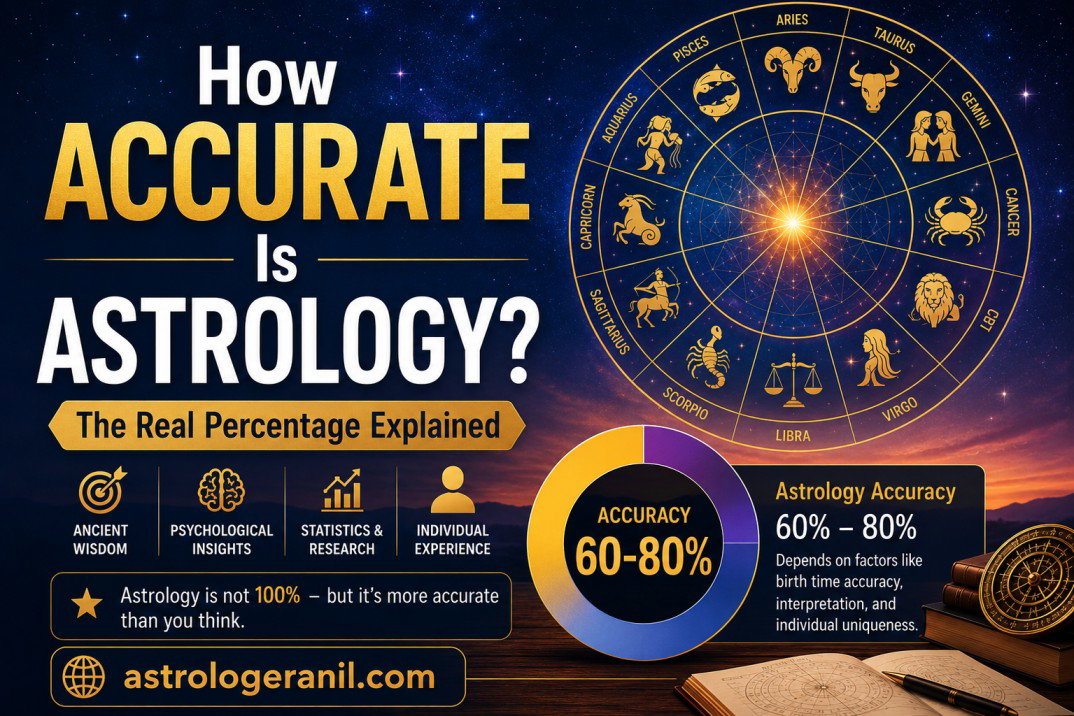
How accurate is astrology? First, define what accurate means. In Vedic astrology, accuracy can mean identifying personality patterns, life timing, and major turning points — when practiced by a skilled astrologer using precise birth data. It is not designed to predict every event with certainty. It is designed to give you clarity and direction. That is where its real power lies.
I have been practicing Vedic astrology for over 15 years. In that time, I have done more than 1 lakh consultations. What I share here is not just theory. It comes from real readings, real clients, and real outcomes.
Table of Contents
What Does "Accurate" Mean in Astrology?
This is the most important question. Most people ask, "Is astrology accurate?" but they never define what accurate means, so the answer can be unclear.
There are two very different types of astrology. First, there is the sun-sign horoscope you read in a newspaper or app. This is based only on your birth month. It is the same for crores of people born in the same month. This kind of astrology is entertainment. It was never meant to be precise.
Second, there is a proper Vedic birth chart reading. This uses your exact date, time, and place of birth. It maps the position of nine planets across twelve houses and twenty-seven Nakshatras. No two birth charts are identical. This analysis is deeply personal.
Accuracy means very different things in each case, so define it before judging any reading.
What Vedic Astrology Can Do Well | What It Cannot Do |
Describe your personality and strengths | Predict the exact date of every event |
Identify your life's major timing windows | Tell you next week's lottery numbers |
Show relationship compatibility signals | Guarantee specific outcomes |
Highlight career and financial tendencies | Override your free will and choices |
Warn about difficult planetary periods | Work without accurate birth data |
When you approach Vedic astrology with this understanding, your experience changes completely. You stop expecting magic. You start receiving genuine guidance.
Why Vedic Astrology Is More Accurate Than Western Astrology
Not all astrology systems are the same. If you define accuracy as precision in birth-based readings, Vedic astrology is consistently more precise than Western astrology. Here is why.
The zodiac system is different. Western astrology uses the tropical zodiac, which is fixed to the seasons. Vedic astrology uses the sidereal zodiac, which tracks the actual positions of stars. Over thousands of years, Earth's tilt has shifted by about 23 degrees. Western astrology has not corrected for this. Vedic astrology has. This means your Vedic sign reflects where the planets actually were at your birth.
The Dasha system is unique. This is Vedic astrology's greatest tool. The Dasha system divides your life into planetary time periods. Each planet rules a specific period — Jupiter rules 16 years, Saturn rules 19 years, Rahu rules 18 years, and so on. When I look at a client's chart, I can identify which planetary period they are running and what themes that planet governs. A client running a Saturn Dasha will face themes of discipline, delay, and restructuring. A Jupiter Dasha brings expansion and opportunity. This level of timing analysis does not exist in Western astrology.
Nakshatras add depth. Vedic astrology uses 27 lunar constellations called Nakshatras. Each Nakshatra has distinct qualities that refine a planet's effect. This gives Vedic readings far more precision than readings based on only twelve zodiac signs.
The Bhargava tradition. My training comes from the Bhargava lineage, which traces its roots to Sage Bhrigu — one of the seven great sages of ancient India. The Bhrigu tradition uses specific predictive techniques passed down through generations. This classical training is very different from learning astrology from a book or an app.
3 Things That Determine How Accurate a Reading Is
Not all astrology readings are equally accurate. Here are the three factors that matter most.
1. The accuracy of your birth data
Your birth chart is built on three pieces of information: date of birth, time of birth, and place of birth. Even a difference of two to three minutes in birth time can shift your Ascendant — the most important point in the chart — by one to two degrees.
I always ask clients for their exact birth certificate time. Hospital records are the most reliable. If you do not know your exact birth time, I use a technique called chart rectification to estimate it based on key life events. However, the most accurate readings always come from confirmed birth times.
2. The skill and depth of the astrologer
Reading a birth chart is a skill. A software program can calculate planetary positions. But interpreting what those positions mean for a specific person in a specific phase of life requires training and experience.
I have seen clients who were told by other astrologers that they would "never marry" due to Mangal Dosha. After reviewing their full chart, I found the Dosha was canceled by other planetary combinations. The client was relieved and eventually married within two years. This kind of nuanced reading requires deep knowledge, not just surface-level pattern matching.
3. The type of question being asked
Vedic astrology is most accurate for certain types of questions. Personality analysis and self-understanding are highly reliable. Life timing — when major changes will happen — is reliable when the Dasha system is used well. Compatibility analysis through Kundali matching is well-structured and consistent.
However, predicting the exact outcome of a specific event — "will I get this particular job offer?" — is harder. Astrology shows tendencies and probabilities, not certainties. A skilled astrologer will tell you what conditions the chart shows and what you can do to improve your odds.
Where Vedic Astrology Is Most Accurate — and Where It Has Limits
Let me be direct. After 15 years of practice, this is what I have seen consistently.
Areas of high accuracy:
Personality readings are remarkably precise. When I describe a client's emotional nature from their Moon sign, their communication style from Mercury, and their approach to relationships from Venus, most people are surprised by how specific it feels. The planetary combinations that create particular personality patterns are well-documented in classical Vedic texts.
Life timing windows are also reliable. A client came to me last year. He had been failing to grow his business for three years. When I checked his chart, he was running the Rahu-Ketu sub-period, known for confusion, sudden reversals, and business instability. I told him this difficult phase would end in eight months. I advised him to stabilize his existing operations rather than expand. Eight months later, he contacted me again. His situation had improved significantly, and he was in a stronger position to grow.
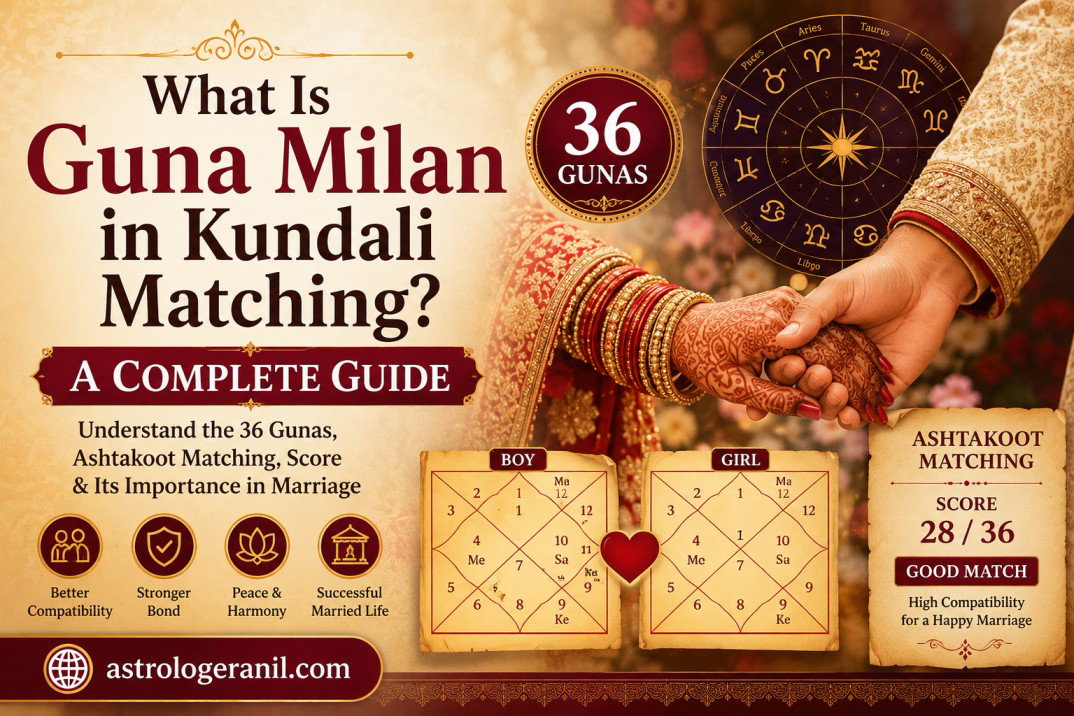
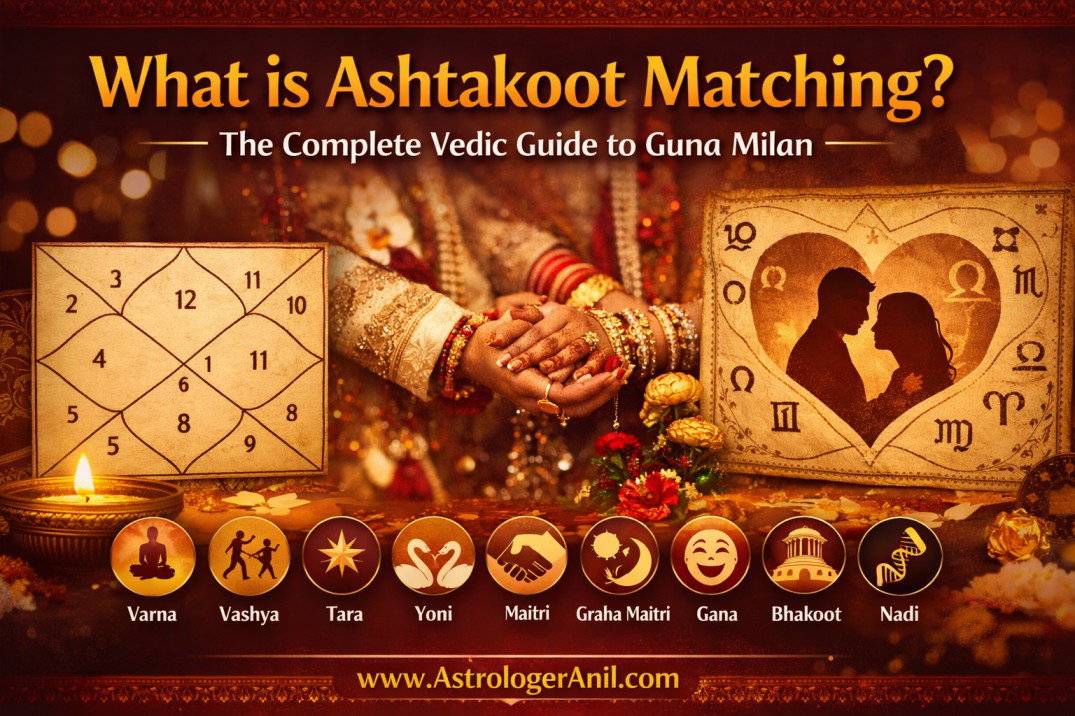
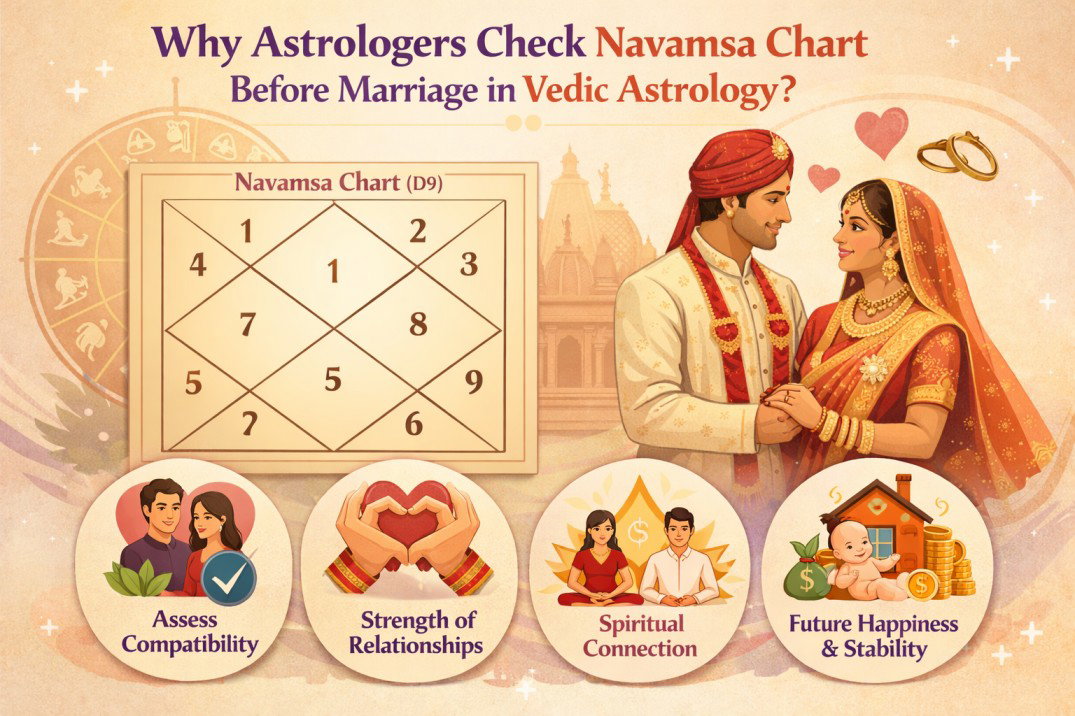
Kundali compatibility for marriage — the Ashtakoot system — is also well-structured. You can learn more about how it works in our detailed guide on Ashtakoot Matching. When both partners' charts are analyzed together with the Navamsa chart, the compatibility signals are consistent.
Areas where astrology has limits:
Exact event dates are difficult. If you ask me, "Exactly when will I meet my future partner?" I can tell you which year or which Dasha period shows a romantic opportunity. But I cannot confidently give you a specific day or month.
Similarly, I do not predict death, extreme illness, or irreversible events with certainty. Classical Vedic texts warn against this. The purpose of astrology is to guide, not to frighten.
Astrology also does not override your choices. If the chart shows a good period for career growth but you do nothing to develop your skills or network, the opportunity may pass. The planetary period creates a window. What you do with that window is your decision.
What Does Science Say About Astrology Accuracy?
This is a fair question. Science matters. Let me address it directly.
The most well-known scientific test of astrology was conducted by physicist Shawn Carlson in 1985. He tested whether professional astrologers could match birth charts to personality profiles. The astrologers performed no better than random chance.
This result is often quoted to dismiss astrology entirely. But there is context missing from that conclusion.
Carlson's study compared astrologers' profiles with those from a standard psychology questionnaire. It did not test Vedic Kundali analysis, Dasha timing, or life-event prediction. It tested one narrow slice of what Western astrologers do.
Deep Vedic astrology works differently. It is not trying to match a personality test score. It identifies life themes, timing windows, relationship patterns, and karmic tendencies based on a complex system of planet-house-sign interactions developed over thousands of years.
A 2018 study in the Journal of Social Psychology found that people who engage with astrology regularly report higher levels of self-understanding and emotional resilience. This aligns with what I see in practice. Astrology is most valuable as a guidance system, not a prediction machine.
My view is this: Vedic astrology is not modern laboratory science. It is a structured, mathematical, time-tested system of observation and interpretation. It was never designed to pass a double-blind scientific test. It was designed to help human beings understand their nature and navigate their lives. On those terms, when practiced with skill and honesty, it works.
For more on the foundations of this system, see our guide on what Vedic astrology is and how it works.
Why Billionaires and Business Leaders Consult Astrology
Here is something few people talk about openly. Many of the world's most successful individuals — business leaders, investors, and heads of state — have quietly used astrology as a decision-making tool.
J.P. Morgan, the legendary American financier, famously said: "Millionaires don't use astrology. Billionaires do." This quote reflects a real pattern. People who have achieved financial success often look for every possible edge in timing major decisions.
In India, this is even more pronounced. Large family-run businesses have traditionally consulted Vedic astrologers before major decisions — mergers, property purchases, new ventures, and even hiring. The concept of Muhurta — choosing an auspicious time for an action — is deeply embedded in Indian business culture.
This does not mean astrology replaces good strategy or hard work. It means that some people use it as an additional layer of insight for timing. They use the planetary cycles to understand when to act and when to wait.
If you are facing a major career or business decision and want guidance based on your Kundali, see our career problem solution and business problem solution pages.
Frequently Asked Questions
Is astrology 100% accurate?
No system of knowledge is 100% accurate — including modern medicine, economics, and weather prediction. Vedic astrology, when practiced by a skilled and experienced astrologer with accurate birth data, can be 70–85% accurate for personality analysis and life timing. It works as a guidance system, not as a guarantee.
How accurate is Vedic astrology compared to Western astrology?
Vedic astrology is generally considered more precise than Western astrology. The main reasons are the sidereal zodiac (which tracks actual star positions), the Dasha planetary timing system, and the depth of Nakshatra analysis. Western astrology uses the tropical zodiac and lacks the Dasha framework, making its timing predictions less specific.
Why does astrology sometimes feel so accurate?
A Vedic birth chart analysis is specific to your exact birth moment. It covers nine planets, twelve houses, twenty-seven Nakshatras, and planetary time periods spanning your entire life. This depth of personalization naturally feels accurate because it is based on your unique data — not a general description written for crores of people. Newspaper horoscopes feel vague because they are vague. Personal chart readings feel precise because they are precise.
Can astrology predict the future with certainty?
Vedic astrology identifies likely trends, timing windows, and probabilities. It does not predict fixed, unchangeable events. Your free will, the effort you put into your life, and the choices you make all influence outcomes. Astrology tells you which periods are favorable and which need care. What you do in those periods is always your choice.
Is online astrology consultation accurate?
Yes, if the astrologer is skilled and uses your correct birth details. The location of the consultation does not affect the accuracy of the analysis. The same birth chart is equally valid whether the reading happens in person, by phone, or by video. At astrologeranil.com, every online consultation is based on detailed Kundali analysis — not generic predictions.
Get an Accurate Vedic Reading from Pandit Anil Bhargava
If you are looking for clarity — about your career, your relationship, your finances, or your life path — a proper Vedic reading can help.
With 15+ years of experience, 1 lakh+ consultations, a 5.0 Google rating, and the Bhargava / Sage Bhrigu lineage tradition, my readings are grounded in classical technique. I look at your full birth chart — not just your sun sign. I check the Dasha period you are running. I examine the houses affecting your key concern. And I give you a clear, honest answer you can act on.
You can also start with our free tools:
📜 Generate your Free Kundali Online — get your birth chart instantly
💑 Free Kundali Matching — check compatibility with your partner
☀️ Free Horoscope Online — daily, monthly, and yearly horoscopes
Book a 30-minute personal consultation for just ₹1,100: 👉 Book Now via Razorpay 📲 WhatsApp Anil Directly
About the Author
Pandit Anil Bhargava is a Vedic astrologer based in Surat, Gujarat. He follows the Bhargava tradition rooted in Sage Bhrigu's teachings — one of India's oldest and most respected astrological lineages. With 15+ years of practice, 1 lakh+ consultations, and a 5.0 Google rating, he specializes in Kundali analysis, marriage compatibility, career astrology, and life guidance. He can be reached at astrologeranil.com or on WhatsApp at +91 99791 22221.
Related Articles: