
Is 24 Out of 36 Guna Match Good for Marriage?
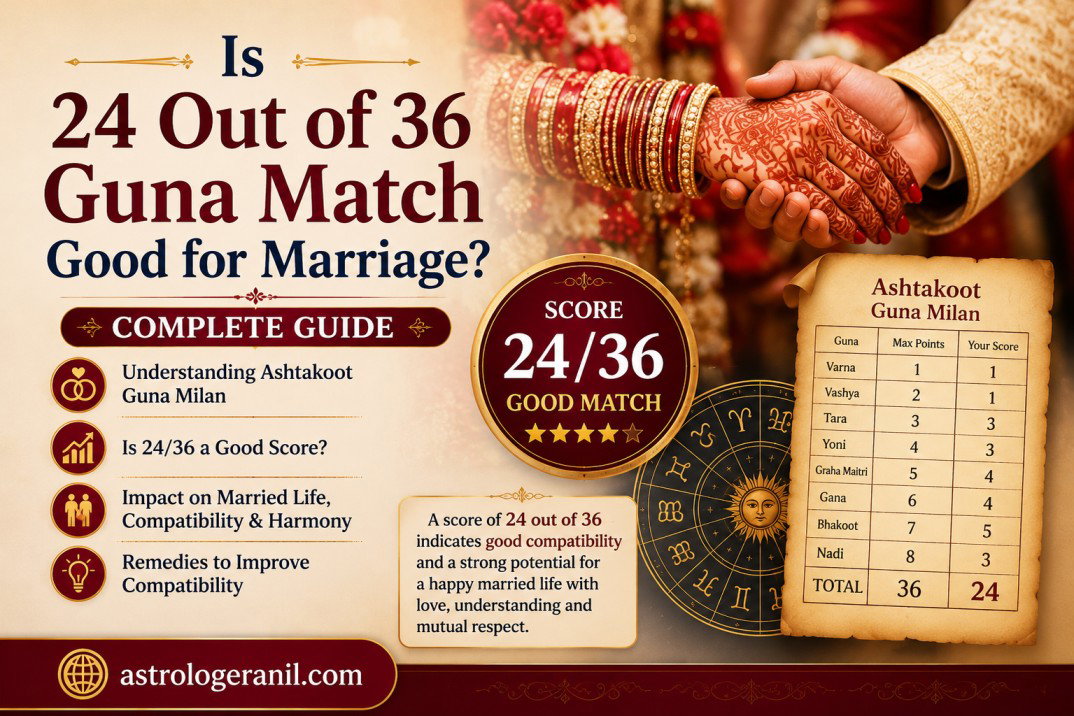
Yes, 24 out of 36 is a good guna match for marriage. It crosses the minimum 18-point baseline with room to spare. Most astrologers approve this score after a quick check of Nadi and Bhakoot dosha. Still, the number alone does not tell the full story. Let’s break down what it really means.
Table of Contents
What Is Guna Milan, in Simple Terms
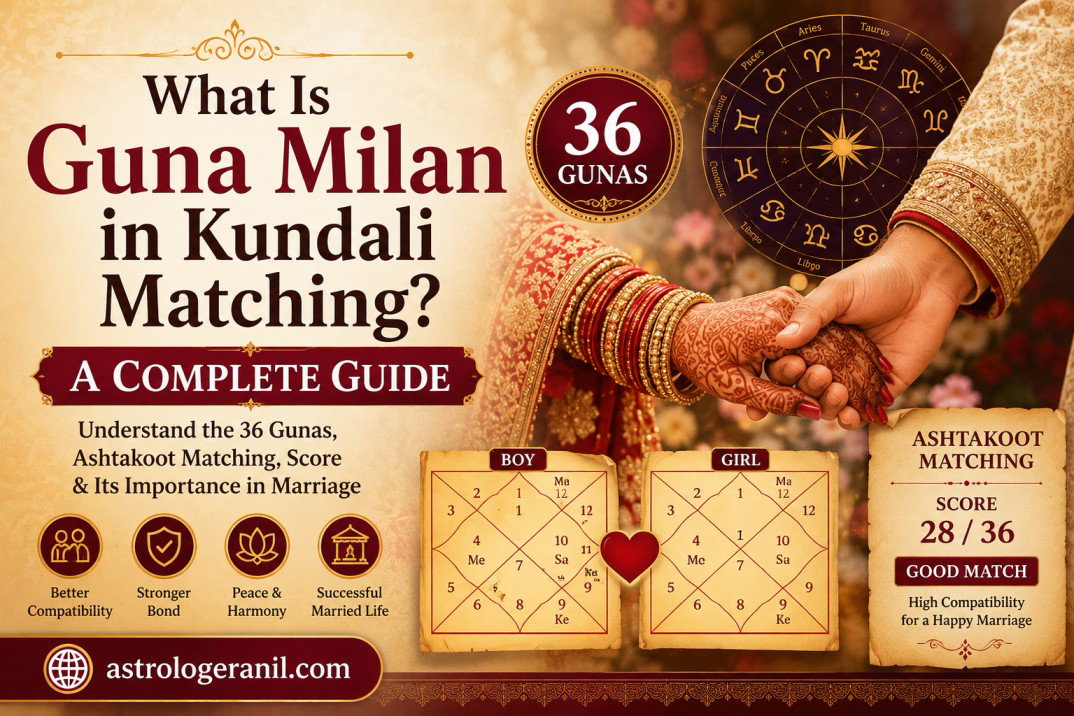
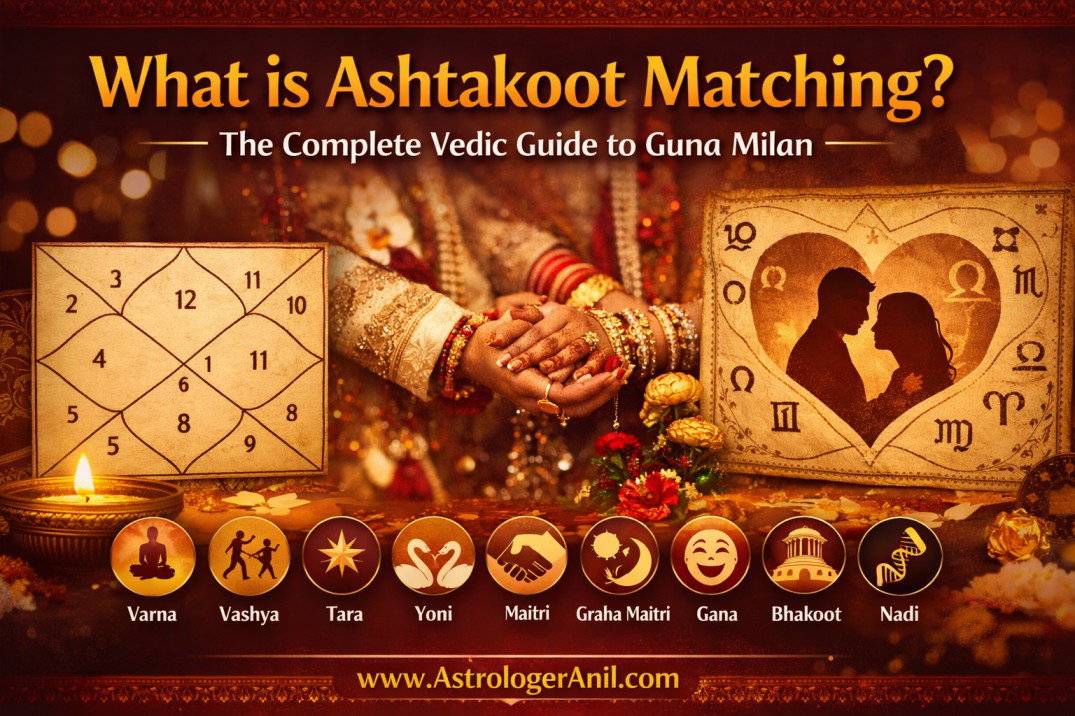
Guna Milan compares the birth charts of a bride and groom. It looks at the Moon’s position in each chart and checks compatibility across eight areas of life. These areas are called kootas. Together, they add up to 36 points.
A higher score means stronger alignment between the two charts. But each koota carries its own weight and its own meaning. So a single number can hide a lot of detail. If you want to see your own score, try our free kundali matching tool for an instant breakdown.
The 8 Kootas and What They Check
Here is a quick look at what each koota measures:
Varna (1 point): Spiritual outlook and mental temperament
Vashya (2 points): Mutual attraction and influence
Tara (3 points): Health and general well-being
Yoni (4 points): Physical and sexual compatibility
Graha Maitri (5 points): Mental connection and friendship
Gana (6 points): Nature and temperament
Bhakoot (7 points): Emotional and financial harmony
Nadi (8 points): Health, genetics, and progeny
Notice how Nadi carries the most weight. A weak Nadi match often worries families more than a low total score. So it pays to check the breakdown, not just the final number.
Where 24/36 Sits on the Scale
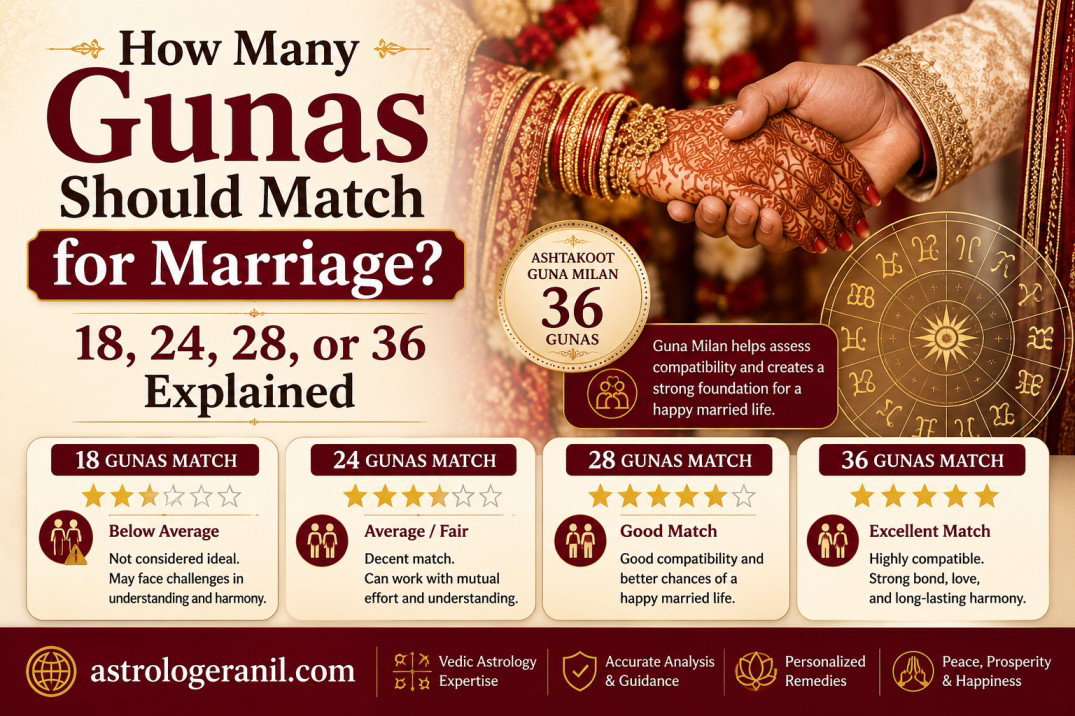
Vedic astrology divides guna scores into broad bands. Here is how 24 compares:
Score Range | What It Means |
Below 18 | Weak match, needs remedies or further review |
18 to 24 | Average match, workable with effort |
24 to 32 | Good match, strong base for marriage |
32 to 36 | Excellent match, rare and highly favourable |
A score of 24 sits right at the entry point of the good range. It clears the classical minimum by six full points. So, most pandits consider it marriage-worthy after a standard dosha review.
Why the Gap to 36 Exists
No couple needs a perfect score. In fact, very few charts ever reach 36. A score of 24 usually means one or two kootas scored low while the rest matched well.
Common patterns at this level include:
One major koota, often Bhakoot or Gana, scoring below average
Two smaller kootas, like Tara or Vashya, need a closer look.
Nadi and Yoni often match well at this range.
This pattern is normal. It does not point to a serious flaw. It simply means a few areas need conscious effort from both partners.
Doshas Worth Checking at This Score
Even with a good total, it helps to check for specific doshas before moving ahead.
Nadi Dosha: This occurs when both partners share the same Nadi. It carries the most weight in the system, so a mismatch here can still matter even with a good total score.
Bhakoot Dosha: This affects emotional and financial harmony between partners. A Bhakoot dosha can still appear even when the overall score looks healthy.
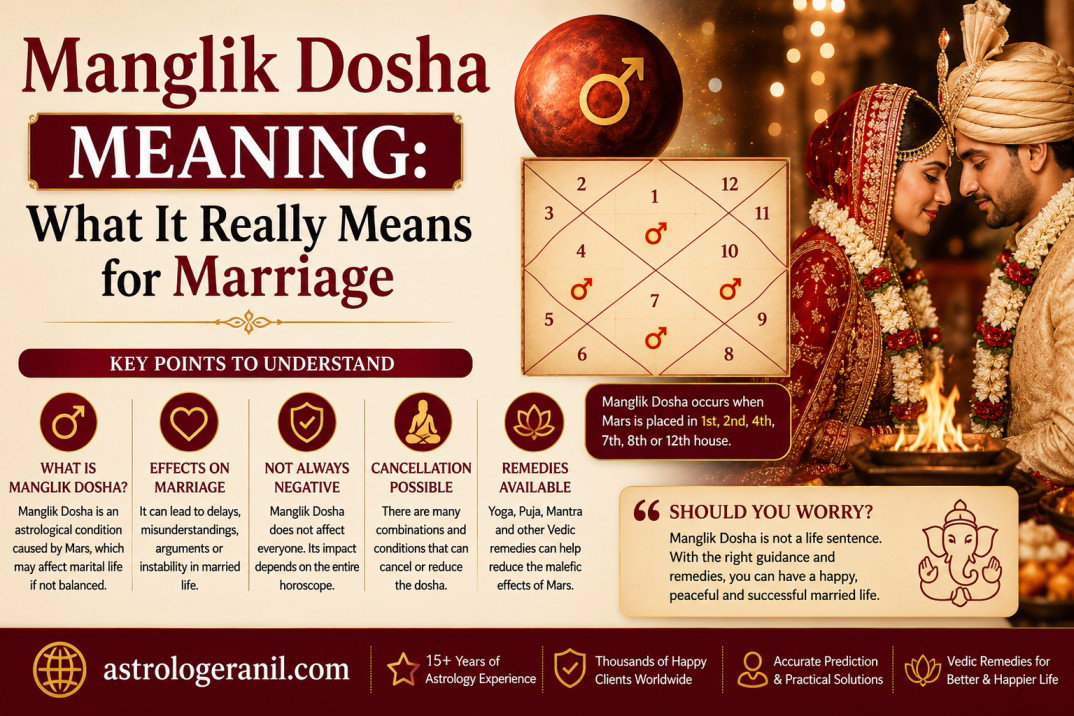
Manglik Dosha: This is checked separately from the 36-point system. It looks at Mars placement and should be reviewed on both sides regardless of the guna score.
A trained astrologer can confirm whether any of these apply and suggest simple remedies if needed. You can also use our free Kundali tool to get a quick first look at your chart.
Does a Good Guna Score Guarantee a Happy Marriage?
No single number can guarantee happiness. Guna Milan is one part of a larger picture. Real marriages also depend on shared values, communication, and effort from both sides.
A score of 24 gives you a strong starting point. Many long, happy marriages begin at this exact range. But the numbers work best alongside a full chart reading, not in place of one.
For a deeper look at timing and other questions couples often ask, our guide on when you will get married covers related factors such as Dasha periods and planetary influences.
What to Check Beyond the Score
Before finalizing any match, it helps to look past the total number. Consider these steps:
Review each koota individually. Find the weak spots and understand what they mean for daily life.
Check for Manglik status. This applies regardless of the guna total.
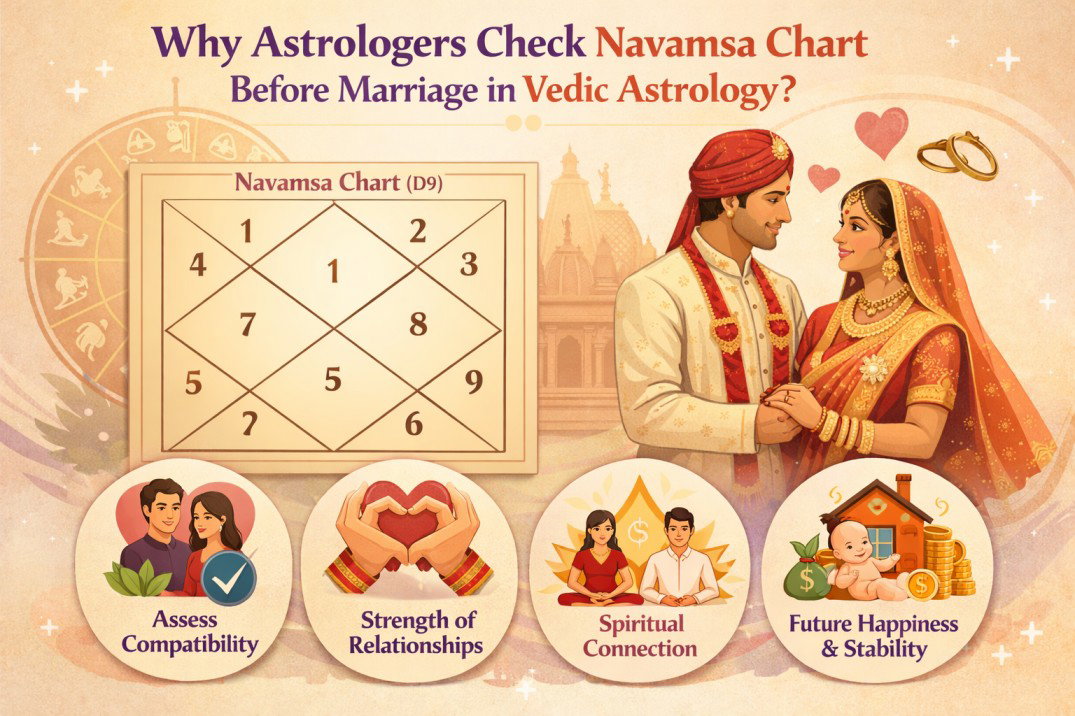
Look at the Navamsa (D9) chart. This adds depth beyond the basic Ashtakoot reading.
Consider the Dasha period. Planetary timing can affect how smoothly a marriage unfolds.
Talk to a qualified astrologer. A personal reading adds context no calculator can offer.
If you want a full Ashtakoot comparison along with Mangal and Nadi dosha checks, try our free kundali matching calculator. It gives you a clear, chart-based verdict in minutes.
The Final Word
A score of 24 out of 36 is a good guna match for marriage. It clears the classical baseline with room to spare and sits firmly in the favorable range. Still, treat the number as a guide, not a final verdict.
Check the Koota breakdown. Review the key doshas. And speak with an experienced astrologer before you finalize any decision. A full chart reading, backed by 15+ years of practice within the Bhargava lineage, can help you see the complete picture rather than just a single number.
Ready for a detailed reading? Book a consultation on WhatsApp or call +91 9979122221 for a personal session with Astrologer Anil Bhargava.